
Beyond Reproductive Health: Why Women’s Health Is Bigger Than You Think
The Market Most Investors Are Still Defining Too Narrowly
Powered By The WHAM® Report
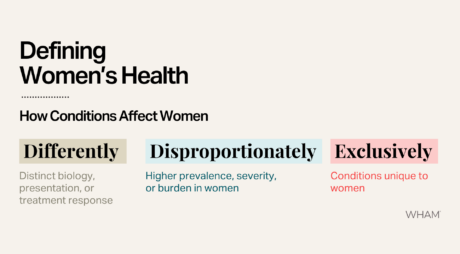
Defining Women’s Health
The persistent misperception that “women’s health” refers solely to reproductive care has severely constrained investment, innovation, and market development for decades. In reality, women’s health represents a vast and largely untapped market opportunity, extending far beyond reproduction.

Why Consistency Matters
Consistency in definition serves multiple strategic purposes:
For Researchers: A unified framework allows for stronger cross-study comparisons, meta-analyses, clearer identification of research gaps, and more efficient progress in understanding sex-based differences.
For Entrepreneurs: Founders can more effectively position their innovations within the women’s health sector, accessing specialized capital, mentorship networks, and strategic partners.
For Investors: A clear, expansive definition enables accurate market sizing, competitive landscape analysis, and opportunity identification. When women’s health is narrowly defined, investors systematically underestimate total addressable markets (TAM), leading to undervaluation and missed opportunities.
For Policymakers and Regulators: Standardized definitions enable better tracking of research funding allocation, clinical trial representation, and health outcome disparities. The World Economic Forum’s new Women’s Health Impact Tracking (WHIT) platform provides a global dashboard for monitoring progress, but only if stakeholders consistently apply the same definitions.
Consistency in definition is a foundational requirement for aligning investment, research, and policy. Without it, the market remains fragmented and undervalued; with it, women’s health becomes a clearly defined, analytically grounded and investable sector.